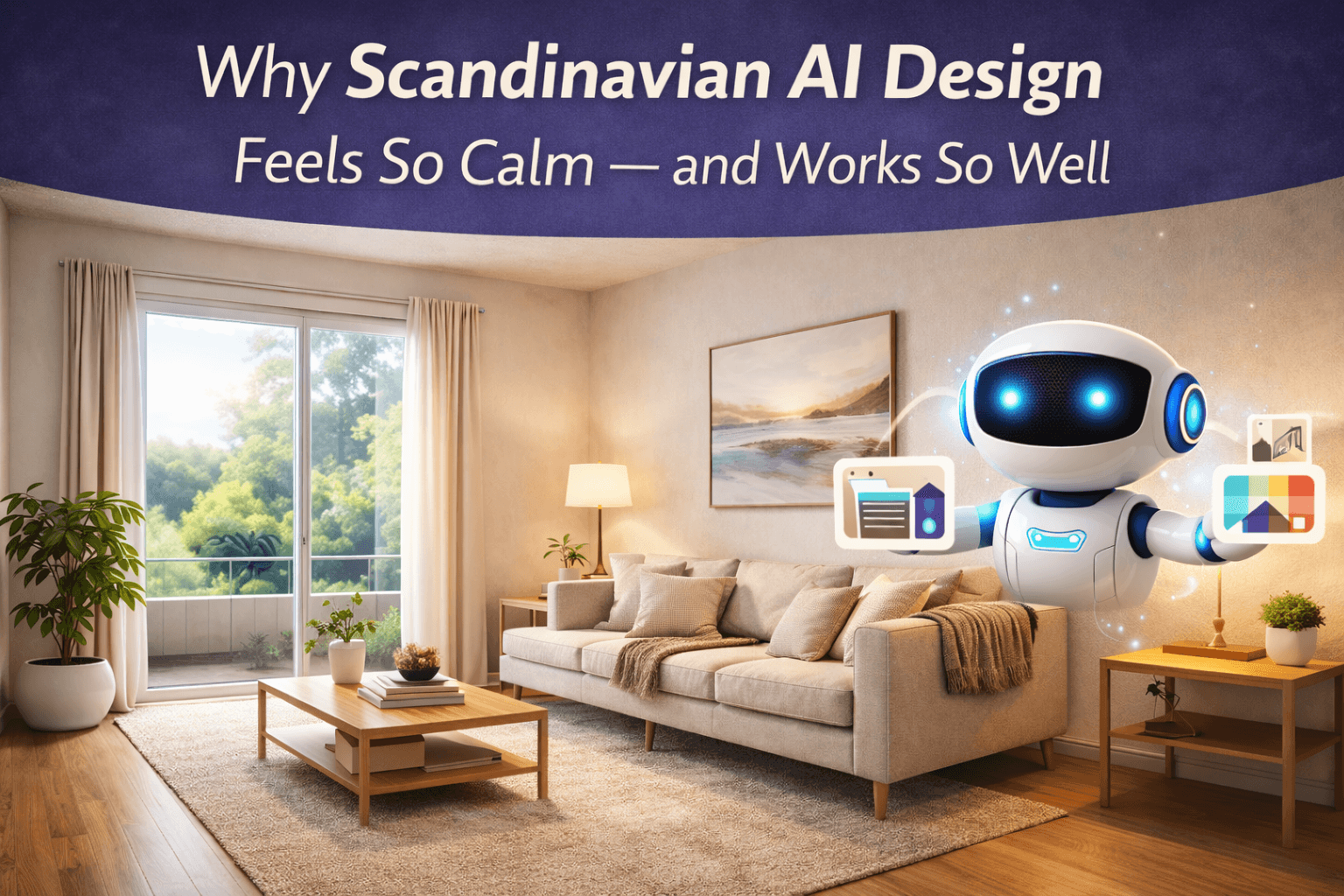
Scandinavian AI Design: Clean, Minimal Interiors Created with Artificial Intelligence
Scandinavian AI design is redefining how modern interiors are created. Instead of relying solely on traditional designers, long consultations, and expensive trial-and-error processes, homeowners and real estate professionals are now using artificial intelligence to generate calm, functional Scandinavian interiors in minutes.
By combining classic Scandinavian design principles—minimalism, natural light, neutral color palettes, and practical layouts—with AI-powered design tools, spaces become more intentional, more livable, and visually consistent. This isn’t a short-term trend or a design gimmick. It’s a structural shift in how interiors are planned, visualized, and executed.
In this guide, we’ll break down what Scandinavian AI design really is, why it works so well, how AI interprets Scandinavian aesthetics, and how you can use it effectively without compromising authenticity.
What Is Scandinavian AI Design?
Scandinavian AI design is the application of artificial intelligence to generate interior designs inspired by Scandinavian principles. These tools analyze room photos, architectural layouts, lighting conditions, and spatial proportions, then apply Scandinavian styles in a way that respects the original structure of the space.
Unlike generic AI design outputs, Scandinavian-focused AI design emphasizes:
- Clean lines and uncluttered layouts
- Functional furniture placement
- Neutral, light-toned color palettes
- Natural materials such as wood, linen, and stone
- Balanced use of light and negative space
The goal is not decoration. It’s livability.
AI doesn’t “invent” Scandinavian style—it interprets it using thousands of reference patterns and applies those principles consistently across different room types.
Why Scandinavian AI Design Works So Well
Scandinavian interiors have always been about restraint. That’s exactly why they pair so well with AI.
Simplicity Is Easier to Optimize
Highly decorative styles leave more room for error. Scandinavian design relies on fewer elements, which allows AI systems to make cleaner, more accurate decisions.
AI excels at:
- Spatial balance
- Symmetry and alignment
- Light distribution
- Furniture scaling
Minimalism reduces complexity—and AI thrives in low-noise environments.
Functional Layouts Matter More Than Decoration
Scandinavian interiors prioritize how people actually use a space. AI models trained on real-world layouts can optimize furniture placement to improve flow, movement, and usability instead of just aesthetics.
This is why Scandinavian AI design often feels better, not just looks better.
Core Principles of Scandinavian Design AI Follows
To understand how AI generates Scandinavian interiors correctly, you need to understand the design logic it’s applying.
Minimalism Without Emptiness
AI avoids overcrowding but doesn’t leave rooms feeling cold or unfinished. It balances open space with essential furniture to maintain warmth.
Neutral, Light-Driven Color Palettes
White, beige, soft gray, muted earth tones—AI prioritizes colors that reflect light and visually expand the room.
Natural Materials Over Decorative Excess
AI consistently selects wood textures, matte finishes, woven fabrics, and subtle contrasts instead of glossy or ornate materials.
Practical Furniture Choices
Scandinavian AI design favors furniture that:
- Serves a clear purpose
- Fits the scale of the room
- Avoids visual heaviness
This results in interiors that feel calm, breathable, and realistic.
How AI Generates Scandinavian Interiors Step by Step
Understanding the process builds trust in the result.
Step 1: Room Analysis
AI scans the room image or layout and identifies:
- Walls, floors, ceilings
- Windows and natural light sources
- Existing furniture and empty zones
- Room dimensions and perspective
This ensures the design respects real architectural boundaries.
Step 2: Style Mapping
Once the room is understood, the AI applies Scandinavian design rules:
- Neutral base palette
- Natural material selections
- Minimal furniture density
- Clean geometry
This isn’t random styling—it’s rule-based interpretation.
Step 3: Layout Optimization
AI adjusts:
- Furniture scale
- Spacing between elements
- Orientation toward light sources
The goal is functional clarity, not decoration.
Step 4: Visual Refinement
Textures, lighting balance, shadows, and perspective alignment are refined to ensure realism and cohesion.
Scandinavian AI Design for Small Spaces
This is where Scandinavian AI design shines hardest.
Small apartments, studios, and compact rooms benefit massively because Scandinavian design principles naturally reduce visual clutter.
AI helps by:
- Choosing space-efficient furniture
- Avoiding bulky forms
- Enhancing natural light perception
- Keeping visual weight low
The result is a space that feels larger, calmer, and more intentional—even when square footage is limited.
Scandinavian AI Design vs Traditional Interior Design
Let’s be honest.
Traditional interior design works—but it’s slow, expensive, and inconsistent.
Traditional Approach:
- Multiple consultations
- Manual mood boards
- Costly revisions
- Long timelines
Scandinavian AI Design Approach:
- Instant visualization
- Multiple variations in minutes
- Consistent aesthetic output
- Lower cost and faster decisions
AI doesn’t replace designers. It removes friction from the early decision-making phase and helps people visualize outcomes faster.
Common Mistakes When Using Scandinavian AI Design
AI is powerful, but misuse kills results.
Over-Minimalizing the Space
Stripping a room too far removes warmth. Scandinavian design still needs texture and human elements.
Ignoring Lighting Context
Scandinavian interiors depend heavily on light. AI-generated designs should always align with actual window placement and daylight direction.
Choosing the Wrong AI Tool
Not all AI design tools understand Scandinavian principles properly. Poor tools exaggerate minimalism or apply generic “white room” aesthetics without nuance.
Quality matters.
Who Should Use Scandinavian AI Design?
Scandinavian AI design isn’t just for homeowners.
Homeowners
- Faster redesign decisions
- Lower planning costs
- Clear visualization before spending money
Real Estate Professionals
- Clean, universally appealing interiors
- Faster buyer engagement
- Reduced staging costs
Developers & Architects
- Early visualization
- Consistent unit presentation
- Market-friendly design concepts
Scandinavian design has broad appeal—and AI makes it scalable.
Why Scandinavian AI Design Performs Well Online
From a marketing standpoint, Scandinavian AI interiors perform exceptionally well.
Why?
- They photograph cleanly
- They don’t polarize buyers
- They feel aspirational but attainable
- They reduce cognitive overload
This makes them ideal for listings, portfolios, and digital-first platforms.
The Future of Scandinavian AI Design
This isn’t the peak.
Future advancements will include:
- Adaptive designs based on buyer behavior
- Real-time layout optimization
- Personalized Scandinavian styles by lifestyle
- AI-guided furniture purchasing decisions
Scandinavian design will remain relevant because it’s grounded in human comfort—not trends.
AI simply accelerates its application.
Final Thoughts: Why This Combination Works
Scandinavian design has always been about clarity, function, and calm.
AI is about optimization, consistency, and speed.
Together, they create interiors that:
- Look timeless
- Feel comfortable
- Scale effortlessly
Scandinavian AI design isn’t replacing creativity. It’s removing friction from good design.
And that’s why it works.


