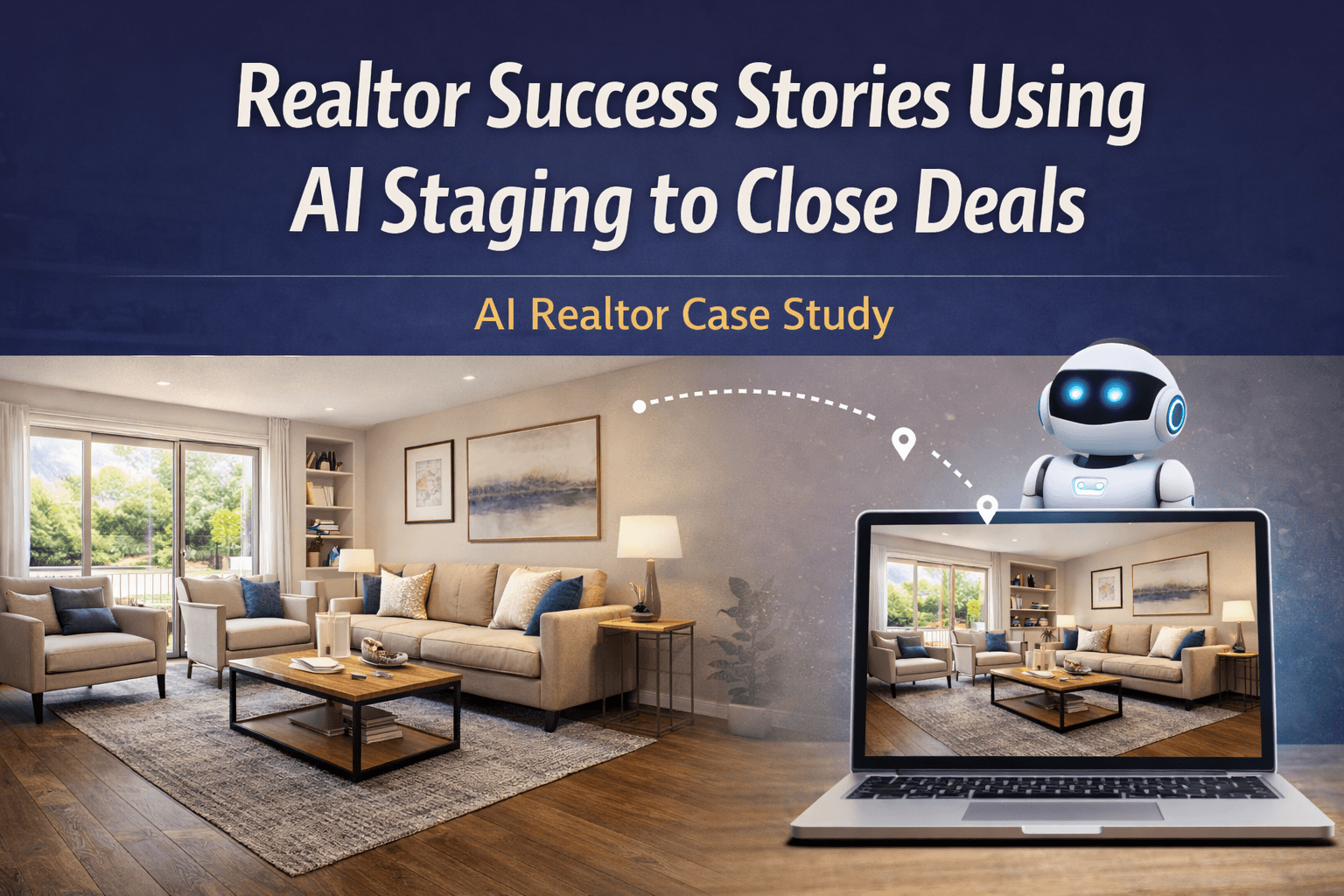
AI Realtor Case Study: How Virtual Staging is Transforming Real Estate Sales
Real estate listings no longer rely solely on location or price to attract buyers. Today, AI realtor case studies show that visually compelling, virtually staged homes are closing deals faster than ever. Realtors and brokers are discovering that what sells a home isn’t just square footage or the number of bedrooms—it’s the photos buyers see online.
Listings with poorly captured or empty rooms often fail to generate inquiries, while homes that appear inviting and personalized get attention instantly. This is where AI-powered virtual staging comes in.
In this article, we explore real-world examples of AI staging in action, backed by Reddit discussions and industry case studies, and reveal how adopting AI staging tools is helping realtors boost engagement, reduce costs, and close deals faster.
How Virtual Staging Changes the Game: An AI Realtor Case Study
Traditional home staging is expensive, time-consuming, and often impractical for vacant or under-construction properties. Physically staging a home can cost $1,500–$5,000 per property, not including professional photography or the coordination of furniture delivery and setup.
AI-powered virtual staging eliminates these barriers entirely:
- Instantly transforms empty rooms into visually appealing, market-ready interiors
- Customizes designs for specific buyer personas—minimalist, luxury, family-friendly, or neutral styles
- Preserves architectural accuracy without physically moving furniture
A Reddit user shared:
“I started virtually staging vacant properties, and the listings suddenly got way more views. People could actually visualize themselves in the space, and inquiries jumped.” — r/realtors
This AI realtor case study demonstrates that digital-first marketing is not experimental—it delivers measurable results.
Real-World Examples from Professionals
Insights from Reddit
Realtors frequently discuss AI staging tools and their experiences on Reddit:
- Increased engagement: Realtors report significantly more clicks, inquiries, and showings when listings are virtually staged. Quality matters—bad AI staging can harm credibility.
- Faster sales: Virtually staged homes attract buyers faster than empty or under-construction properties.
- Cost savings: Eliminating physical staging expenses while presenting visually compelling interiors saves thousands per listing.
These anecdotes show that AI staging is reshaping how buyers interact with listings, making it an essential tool for competitive markets.
Case Studies from Industry Sources
Several firms have documented measurable improvements using AI staging:
- A U.S.-based brokerage reported 30% faster sale rates for virtually staged listings versus unstaged properties (pictastic.ai)
- Another company reduced staging costs by 70% while significantly increasing buyer inquiries (bellastaging.ca)
These case studies provide data-backed evidence of AI’s transformative impact on real estate marketing.
How AI Staging Works
AI staging follows a three-step workflow to ensure high-quality results:
Step 1: Room Analysis
The AI tool first scans the room, detecting key elements like walls, windows, doors, flooring, and lighting conditions. This ensures furniture placement is realistic and respects the actual space.
Step 2: Style Application
Realtors can select interior design styles that match their target buyer personas:
- Minimalist for young professionals
- Luxury for high-end buyers
- Family-friendly for suburban homes
- Neutral for rentals
This level of customization allows the same space to appeal to multiple buyer demographics without reshoots or additional costs.
Step 3: Rendering & Optimization
AI generates photorealistic images that align with shadows, reflections, and perspective. Some platforms even analyze engagement metrics, testing which styles attract more clicks or inquiries. Over time, the system optimizes visuals for maximum marketing effectiveness.
The Psychological Impact on Buyers
Photos are often the first interaction buyers have with a property. Key insights include:
- Buyers spend only a few seconds scanning each listing
- High-quality virtually staged photos create an emotional connection
- Personalized visuals tailored to target demographics lead to higher showing rates
AI allows agents to experiment with multiple visual approaches for a single property—something impossible with traditional staging.
Benefits for Realtors
Adopting AI staging delivers clear advantages for agents and brokers:
Faster Market Response
- Listings can go live same-day
- Immediate revisions based on feedback
- Quick MLS and portal uploads
Cost Efficiency
- Eliminates furniture rental and delivery fees
- Reduces professional photography requirements
- Minimizes staging manpower
Competitive Differentiation
- Modern, realistic visuals impress buyers
- Demonstrates tech-savviness to clients
- Enhances agency branding and credibility
Realtors consistently report that agents using AI staging gain a noticeable competitive edge, especially in fast-moving markets.
Challenges and Lessons Learned
While AI staging is powerful, it is not without pitfalls:
- Poor rendering or unrealistic lighting can reduce trust
- Overuse of filters or exaggeration may mislead buyers and violate listing rules
- Quality varies by platform—not all AI staging tools deliver professional results
Realtors emphasize the importance of selecting reliable software and ensuring that staging maintains architectural accuracy.
Implementing AI Staging Successfully
To get the most out of AI staging, follow these steps:
- Start Small: Pilot AI staging on a few listings
- Test Styles: Offer different designs for multiple buyer personas
- Measure Results: Track clicks, inquiries, and conversions
- Optimize Continuously: Use AI insights to improve visual content
These steps ensure maximum ROI and reduce the risk of mistakes.
Emerging Trends in AI Realtor Case Studies
AI staging is evolving beyond static photos:
- Virtual open houses: Buyers explore staged homes in immersive 3D environments
- Predictive engagement analytics: AI predicts which listing visuals will perform best
- Automated social media campaigns: AI-generated staging images feed directly into marketing channels
These trends show that AI staging is becoming a core strategy in real estate marketing, not just a novelty.
Conclusion: Real Results Matter
Reddit stories and documented case studies converge on a single point:
AI staging works when executed properly.
Realtors adopting AI save time, cut costs, close deals faster, and increase overall marketing ROI.
The evidence is clear: early adopters gain leverage, traditionalists lag behind, and the market increasingly rewards agents who combine technology with professional expertise.
For real estate professionals, the question isn’t if AI staging should be used—it’s how quickly you can implement it and start seeing measurable results.


