Optimizing Listings with Virtual Designs: How AI Listing Optimization Is Changing Real Estate Marketing
Real estate listings don’t fail because properties are bad. They fail because buyers don’t understand the space.
Scroll through any property portal, and you’ll see the same problem repeated endlessly: empty rooms that feel cold, awkward angles that don’t explain scale, cluttered interiors that distract instead of attract. In a market where buyers decide in seconds whether to click, save, or move on, poor visuals quietly kill listings long before price or location even matter.
This is where AI listing optimization using virtual designs is changing the game.
Not with flashy, fake-looking interiors. Not with misleading “Pinterest-perfect” renders. But with clean, realistic visuals that help people understand a property before they ever step inside.
Virtual design powered by AI isn’t about deception. It’s about clarity — and clarity sells.
Why Listing Optimization Matters More Than Ever
The way buyers search for homes has fundamentally changed. Most decisions are made online first, emotionally, before logic catches up.
Here’s the uncomfortable truth many agents don’t want to admit:
- Buyers skip listings that don’t immediately make sense visually
- Empty rooms feel smaller than they are
- Poor staging lowers perceived value
- Confusing layouts reduce inquiries
This happens even when the property itself is objectively good.
AI-powered listing optimization fixes this problem by enhancing visuals in a way that feels natural and honest — helping buyers visualize living in the space, not just viewing it.
What Is AI Listing Optimization?
AI listing optimization uses artificial intelligence to enhance property visuals so listings perform better across platforms like Zillow, Realtor.com, Rightmove, and social media.
This includes:
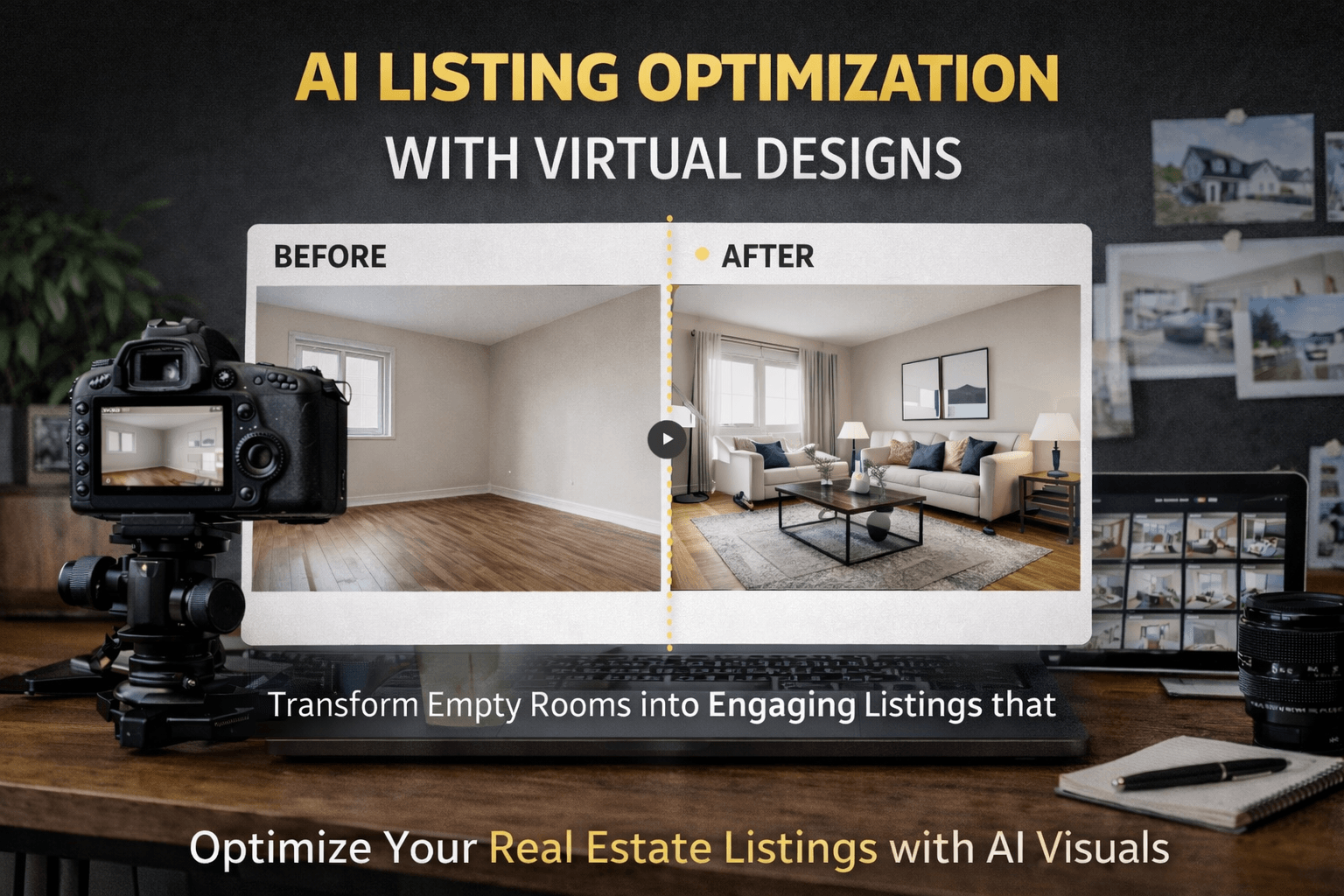
- Virtual staging of empty rooms
- Digital decluttering
- Style adjustments to match buyer expectations
- Layout visualization without altering structure
- Consistent, high-quality presentation across all images
Unlike traditional staging, this doesn’t require furniture rentals, logistics, or physical access after photography. Everything happens digitally — fast, affordable, and repeatable.
Platforms like aiinterior.pro specialize in this exact use case: realistic, professional AI-generated visuals designed specifically for real estate listings.
The Psychology Behind Virtual Designs
Buyers don’t buy square footage. They buy potential.
An empty living room forces the buyer to do mental work:
- “Will my couch fit here?”
- “Is this room too narrow?”
- “Where would the TV go?”
Most won’t bother answering those questions. They’ll just scroll past.
Virtual designs remove that friction.
When a space is lightly staged:
- Scale becomes obvious
- Flow makes sense
- The room feels livable
This isn’t manipulation — it’s guidance. The same reason grocery stores show food plated instead of raw ingredients.
AI Listing Optimization vs Traditional Staging
Traditional staging has its place, but it comes with real limitations:
Traditional Staging Problems
- Expensive furniture rentals
- Scheduling and logistics
- Limited styles
- Not scalable for large portfolios
- Impossible for already-listed or vacant properties
AI Virtual Design Advantages
- No physical staging required
- Multiple styles from the same photo
- Faster turnaround
- Consistent quality
- Cost-effective for every listing
This is why many agents and photographers quietly adopt AI-based optimization tools instead of traditional staging — especially for vacant homes and investment properties.
Virtual Designs for Different Listing Scenarios
AI listing optimization isn’t one-size-fits-all. Different listings need different approaches.
Vacant Properties
Vacant homes perform worse online — period. AI virtual designs add warmth and context without altering reality.
Dated Interiors
Instead of expensive renovations, AI visuals can show potential modern designs while keeping structure intact.
Rental Listings
Clean, minimal virtual designs help tenants understand the layout without over-promising.
New Developments
AI designs help market units before they’re fully furnished or even completed.
This flexibility is exactly why platforms like aiinterior.pro are becoming standard tools rather than experimental ones.
Does AI Listing Optimization Increase Property Value?
Short answer: yes — perceptually and practically.
AI visuals don’t change the physical property, but they absolutely affect:
- Perceived value
- Click-through rates
- Time on listing
- Inquiry volume
When a listing looks premium, buyers assume it is premium.
Multiple agents report:
- More saves
- More inquiries
- Better showing attendance
This doesn’t mean inflating expectations. It means presenting the property at its best — the same way professional photography replaced phone photos years ago.
Ethical Concerns: Where the Line Actually Is
This is where people get emotional, so let’s be precise.
AI listing optimization becomes unethical when:
- Structural elements are altered
- Views are fabricated
- Finishes are misrepresented
- Room sizes are exaggerated
Good AI staging tools do not do this.
Responsible platforms keep the architecture identical and focus only on:
- Furniture
- Lighting tone
- Decor style
That’s no different from:
- Wide-angle lenses
- HDR lighting
- Sky replacement
All accepted industry standards.
The key difference is subtlety. And that’s where many tools fail — but aiinterior.pro is built specifically to avoid over-stylized, fake-looking results.
Why Subtle Virtual Designs Perform Best
Over-designed interiors create suspicion. Buyers feel tricked when reality doesn’t match photos.
Subtle AI staging works because:
- It feels believable
- It doesn’t distract
- It supports the space instead of stealing attention
Clean, neutral styles convert better than dramatic ones. This is why professional-grade AI tools prioritize realism over visual noise.
AI Listing Optimization for Real Estate Photographers
Photographers are some of the earliest adopters of AI virtual designs — even if they don’t advertise it.
Why?
- Clients ask for faster turnaround
- Vacant listings underperform
- Budgets are tighter
AI allows photographers to:
- Offer staging as an add-on
- Increase order value
- Deliver consistent results
Used correctly, AI doesn’t replace photography — it enhances it.
Why aiinterior.pro Fits This Use Case
Let’s be clear: not all AI staging tools are created equal. Many generate unrealistic, exaggerated visuals that destroy trust.
aiinterior.pro is designed specifically for:
- Real estate listings
- Photographers
- Agents and brokerages
What sets it apart:
- Realistic outputs
- Architecture-preserving designs
- Clean, buyer-friendly styles
- Fast turnaround
- No over-staging
It’s built for listings — not social media art.
How AI Listing Optimization Fits Into Modern Marketing
Today’s listings aren’t just on property portals. They live on:
- Email campaigns
Virtual designs give agents flexibility:
- Multiple visuals from one shoot
- Consistent branding
- Better thumbnails
That consistency increases trust — and trust drives conversions.
What the Data Keeps Showing
While many professionals don’t publicly disclose AI usage, patterns are clear:
- Listings with staged visuals outperform unstaged ones
- Clean visuals increase engagement
- Buyers spend more time on optimized listings
AI isn’t the future anymore. It’s already part of the workflow.
Final Thoughts: AI Listing Optimization Is Already Here
The debate isn’t whether AI virtual designs should be used. They already are.
The real question is whether they’re used responsibly.
When done right, AI listing optimization:
- Improves clarity
- Enhances understanding
- Increases engagement
- Preserves trust
Tools like aiinterior.pro aren’t about exaggeration or deception. They’re about helping listings communicate better — and communication is what sells property.
Listings that explain themselves win. Listings that confuse buyers lose.
AI just makes the difference visible.


