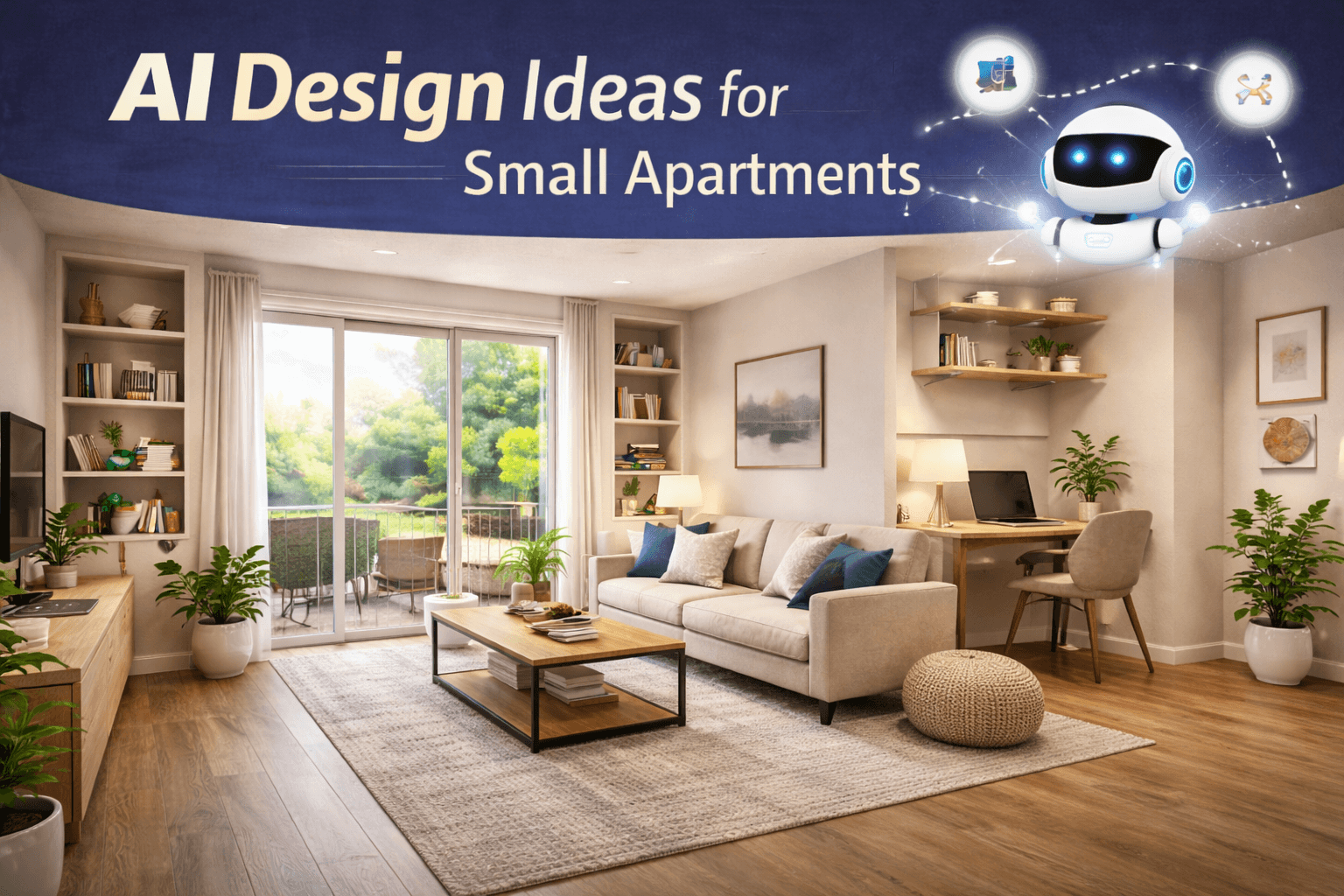
AI Design Ideas for Small Apartments: Transform Your Space Effortlessly
Small apartments come with big design challenges. Limited space, awkward layouts, and the constant struggle to balance style with functionality can make decorating feel overwhelming. But now, AI-powered tools are changing the game, helping homeowners and renters create stylish, functional spaces without the guesswork.
In this guide, we’ll explore AI design ideas for small apartments, step-by-step strategies, and practical examples so you can transform your compact living space into a visually appealing, organized, and comfortable home.
Why Small Apartment Design is Hard
Small apartments require thoughtful planning because every square foot counts. Poorly arranged furniture or cluttered décor can make a space feel cramped, messy, and uninviting. Common small-apartment challenges include:
- Limited storage space
- Narrow hallways and small rooms
- Lack of natural light
- Multi-functional needs (living, working, entertaining)
Traditional interior design approaches often require trial and error, costly purchases, or hiring a professional. That’s where AI living room design and AI apartment design tools come in to simplify the process.
How AI Helps Transform Small Apartments
AI design tools leverage machine learning, computer vision, and design algorithms to provide actionable solutions for compact spaces. Here’s how:
- Space optimization: AI analyzes room layouts and suggests furniture arrangements that maximize usable space.
- Style matching: AI recommends color palettes, furniture, and décor based on your preferences.
- 3D visualization: You can see your apartment fully furnished and styled before buying anything.
- Personalized recommendations: AI tailors suggestions based on lifestyle, number of residents, and activities.
By combining creativity with data-driven insights, AI tools save time, reduce mistakes, and create spaces that feel larger and more functional.
Step 1: Optimize the Layout with AI
The first step in small apartment design is space planning. AI tools can scan your apartment or allow you to input dimensions to create a digital floor plan.
How AI Suggests Furniture Placement
AI uses your apartment’s measurements to suggest:
- Furniture that fits the scale of the room
- Multi-purpose pieces, such as sofa beds or expandable tables
- Optimal walking paths and traffic flow
- Zones for living, working, and storage
For example, an AI tool might suggest placing a sofa against a wall to open the center space, adding wall-mounted shelves to maximize vertical storage, and using a foldable dining table for flexible seating.
Step 2: Choose the Right Color Palette
Small apartments can feel cramped if colors are too dark or mismatched. AI tools analyze lighting, room size, and design preferences to recommend cohesive color schemes.
AI Tips for Small Apartment Colors
- Light, neutral colors make rooms feel larger
- Pops of color can highlight furniture or décor without overwhelming
- AI can simulate different color combinations digitally so you can see the effect before painting or buying
With AI, you can experiment with bold accent walls, complementary furniture tones, or layered textures without committing to physical changes first.
Step 3: Select Multi-Functional Furniture
In small apartments, every piece of furniture must earn its keep. AI design tools can suggest items that serve multiple purposes.
Examples:
- Sofa beds for guests
- Foldable desks for remote work
- Storage ottomans for seating and hidden storage
- Wall-mounted foldable tables
AI platforms can even recommend furniture based on your room dimensions, style preferences, and budget. This reduces the risk of buying items that don’t fit or clash with your décor.
Step 4: Maximize Storage in Small Spaces
Storage is the biggest challenge in compact apartments. AI design tools provide creative storage solutions that use vertical space, corners, and hidden areas.
Smart Storage Solutions Suggested by AI
- Floating shelves above doors or windows
- Under-bed drawers or lift-up storage beds
- Modular storage units that fit irregular spaces
- Stackable storage bins for closets
By visualizing storage solutions before implementation, AI helps you reduce clutter and maintain a tidy, functional home.
Step 5: Lighting Optimization
Natural and artificial lighting dramatically affect how small spaces feel. AI can analyze room dimensions and window placements to recommend lighting setups that make spaces look larger and more inviting.
AI Lighting Tips
- Use mirrors to reflect natural light
- Layer ambient, task, and accent lighting for flexibility
- Select compact, wall-mounted, or recessed lighting to save space
For example, AI might suggest placing a floor lamp near a reading nook while adding LED strips under cabinets to illuminate countertops without cluttering surfaces.
Step 6: Decorate with AI Precision
Decor and accessories make small apartments feel cozy, but overcrowding can be an issue. AI tools recommend décor that complements your style without overcrowding the space.
AI-Recommended Decor Ideas
- Compact rugs to define areas
- Floating shelves with curated items
- Plants for vertical or hanging décor
- Mirrors to create depth and reflect light
AI can even simulate the final look, letting you experiment with different arrangements and colors before buying anything.
Step 7: Personalize Your Apartment
AI design is not just about aesthetics; it also considers your lifestyle. For instance:
- Couples may want multi-functional storage and dual workspaces
- Pet owners need durable, easy-to-clean furniture
- Remote workers need ergonomic and noise-reducing setups
By analyzing your inputs, AI generates designs that fit your needs, taste, and lifestyle, making small apartment living more comfortable and efficient.
Step 8: Virtual Staging for Visualization
Many AI platforms offer virtual staging features, allowing you to see your apartment fully furnished in 3D. Benefits include:
- Testing multiple styles instantly (modern, minimalist, bohemian)
- Adjusting furniture size and placement digitally
- Visualizing décor choices before purchasing
This reduces decision fatigue, prevents costly mistakes, and ensures your small apartment is both functional and visually appealing.
Step 9: Optimize Workflow and Budget
AI tools help you stay on budget by recommending products available online and showing realistic pricing estimates. Features include:
- Cost comparisons between furniture pieces
- Suggestions for DIY versus ready-made items
- Alerts for budget overruns or unnecessary purchases
This way, you can create a beautiful small apartment without overspending.
Benefits of Using AI for Small Apartments
Using AI in small apartment design brings multiple advantages:
- Time-Saving: Visualize designs in hours rather than weeks
- Cost-Effective: Avoid buying items that don’t fit or match
- Data-Driven Decisions: Insights on layout, lighting, and décor
- Personalized Design: Tailored to your lifestyle and taste
- Flexibility: Test multiple layouts and styles digitally
These benefits help maximize the potential of small apartments, making them feel spacious, organized, and stylish.
Emerging Trends in AI Small Apartment Design
AI design is evolving rapidly, and new trends are emerging:
- AR and VR Integration: Walk through your apartment in a virtual environment
- Predictive Design Suggestions: AI predicts which layouts and styles will optimize space
- Sustainability Recommendations: AI suggests eco-friendly materials and furniture
- Automated Shopping Lists: AI generates furniture and décor recommendations with links to purchase
These trends make AI a crucial tool for anyone living in compact spaces.
Common Mistakes to Avoid in Small Apartment Design
Even with AI, there are pitfalls to avoid:
- Overcrowding the space with furniture or décor
- Ignoring natural light or window placement
- Using too many contrasting colors
- Choosing furniture without considering scale or multi-functionality
- Skipping storage optimization
AI tools help minimize these mistakes by generating layouts, color schemes, and furniture suggestions that work with your specific apartment dimensions.
Step-By-Step Implementation Checklist
- Measure your apartment and input dimensions into the AI tool
- Select your preferred design style and color palette
- Test multiple layouts for furniture and storage
- Optimize lighting digitally
- Add décor and accessories while monitoring scale and balance
- Review virtual staging results and make adjustments
- Generate a shopping list within budget
- Implement design physically while referencing AI suggestions
Following these steps ensures a smooth, cost-effective, and visually pleasing transformation.
Conclusion: Small Apartment Living Made Easy with AI
Small apartments no longer have to feel cramped, dull, or inefficient. AI design tools empower you to make smart, stylish choices, optimizing layouts, décor, lighting, and storage. From virtual staging to personalized recommendations, AI helps turn even the tiniest apartments into functional, cozy, and aesthetically appealing homes.
With AI for small apartments, you can save time, reduce costs, and enjoy a space that reflects your lifestyle and taste—without the stress of guesswork. Whether you’re a renter, homeowner, or interior design enthusiast, AI is your key to unlocking the full potential of small apartment living.


