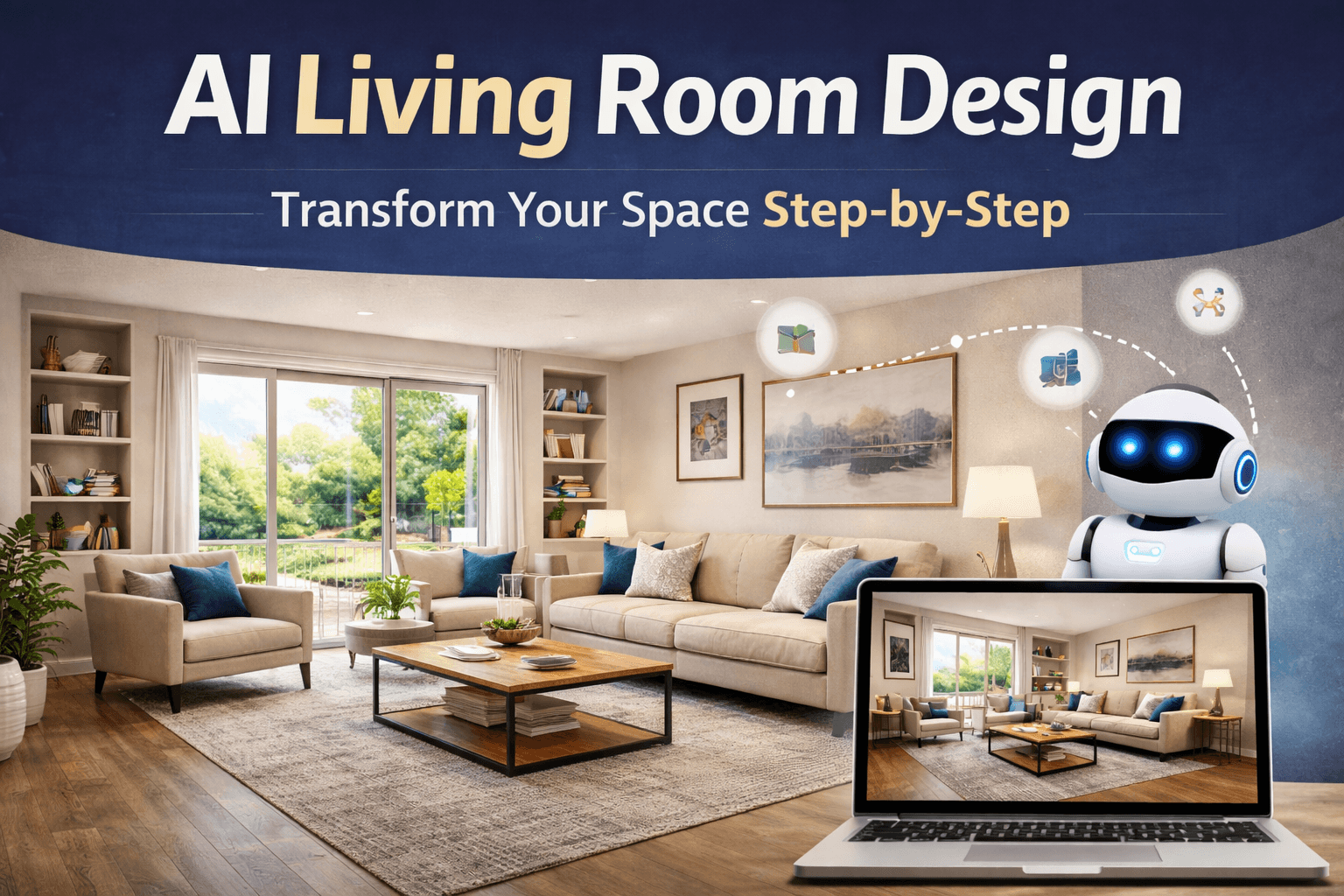
Redesigning your living room no longer has to mean expensive renovations, guesswork, or hours spent scrolling through design magazines. With AI living room design, homeowners and interior enthusiasts can now create stunning, functional, and personalized living spaces in just a few clicks. From furniture placement to color schemes, AI tools analyze your space, suggest optimal layouts, and visualize your dream living room in photorealistic detail.
In this guide, we’ll show you how to transform your living room using AI step-by-step, explore practical tips for getting the most out of AI design tools, and explain why this approach is revolutionizing home interiors.
Why Choose AI for Living Room Design
Traditionally, designing a living room required professional interior designers, multiple consultations, and expensive trial-and-error processes. Even after hiring a designer, it could take weeks or months to visualize different layouts, color palettes, and furniture options.
AI living room design offers several advantages:
- Instant visualization: See multiple layouts and styles in minutes.
- Personalization at scale: Tailor the design to your lifestyle, preferences, and space constraints.
- Cost efficiency: Avoid purchasing furniture or decor that doesn’t work for your room.
- Data-driven suggestions: AI evaluates room dimensions, lighting, and style trends to recommend the most functional layouts.
By leveraging AI, you no longer need to rely on guesswork or expensive mistakes.
Step 1: Measure Your Space Accurately
Before AI can optimize your living room design, you need to provide accurate measurements. Most AI interior design tools allow you to enter:
- Room dimensions (length, width, height)
- Window and door placements
- Existing furniture that must remain
H3: Using Room Scanning Tools
Some AI apps allow 3D room scanning using your smartphone camera. This creates a virtual floor plan automatically, saving you the hassle of manual measurements.
H3: Include Architectural Features
Don’t forget to input columns, beams, or other structural elements. AI needs this data to ensure furniture placement is feasible and visually balanced.
Step 2: Define Your Design Goals
AI works best when it knows your preferences. Before starting:
- Decide on a style theme: modern, contemporary, minimalist, boho, or luxury.
- Identify key functional needs: seating capacity, storage, entertainment zones.
- Choose a mood or ambiance: cozy, bright, relaxing, or energetic.
H3: Matching AI Suggestions to Lifestyle
For families with kids, AI can prioritize durable materials and furniture placement that maximizes safety. For minimalists, AI can focus on clean lines and multipurpose furniture.
Step 3: Furniture Placement and Layout Optimization
Once your space is scanned and goals are defined, AI can propose furniture layouts optimized for flow, functionality, and aesthetics.
H3: Optimal Seating Arrangements
AI suggests seating arrangements that:
- Maximize conversation areas
- Ensure clear sightlines to entertainment units
- Create open walkways without overcrowding
H3: Maximizing Flow and Functionality
AI can recommend multifunctional furniture, like modular sofas or extendable tables, to make the most of your available space. It can also adjust layouts based on natural light patterns.
Step 4: Color Scheme and Lighting Selection
Colors and lighting define the mood of a living room. AI living room design tools can generate multiple color palettes and lighting setups based on your preferences.
H3: Choosing Wall Colors
AI evaluates your room’s size, lighting, and furniture to suggest wall colors that make the space appear larger, cozier, or more vibrant.
H3: Selecting Furniture Hues
Furniture colors can either contrast or complement walls. AI proposes options that maintain harmony while highlighting key design elements.
H3: Enhancing Lighting
AI considers both natural light and artificial sources. It can suggest placement for lamps, sconces, or ceiling lights to brighten darker corners or highlight focal points.
Step 5: Decor and Accessory Suggestions
AI doesn’t stop at furniture and walls—it also helps you style your living room with decor.
H3: Choosing Artwork and Wall Decor
AI can recommend artwork, mirrors, or wall installations based on your theme, room dimensions, and focal points.
H3: Adding Textiles and Accents
From rugs and cushions to curtains and throws, AI suggests textures and patterns that complement your furniture and overall design scheme.
Step 6: Review and Customize
Even with AI recommendations, personal touches matter. Most platforms allow you to:
- Adjust furniture positions manually
- Swap colors or textures
- Add or remove decor items
AI acts as a guide, but you remain in control, ensuring the final design reflects your taste.
Step 7: Implement and Optimize
Once the virtual design is ready, it’s time to turn it into reality.
H3: Creating a Shopping List
AI can generate a list of recommended furniture and decor items available online, including prices and links to purchase.
H3: Tracking Progress and Adjustments
Some AI platforms allow you to visualize changes as you implement them. You can update the room plan in real-time, helping prevent costly mistakes or mismatched items.
Benefits of AI Living Room Design
Using AI for living room redesign provides several advantages for homeowners:
- Faster redesign: Transform your space in hours instead of weeks.
- Better visualization: See photorealistic outcomes before spending a dime.
- Personalized solutions: Designs are tailored to your lifestyle and taste.
- Cost savings: Avoid trial-and-error purchases that don’t work.
- Enhanced creativity: Experiment with bold styles and layouts risk-free.
Common Mistakes to Avoid
Even with AI, homeowners can make mistakes. Avoid these pitfalls:
- Ignoring room functionality in favor of aesthetics
- Overcrowding space with furniture or decor
- Choosing materials that don’t match lifestyle needs
- Relying solely on AI without personal tweaks
Remember: AI provides guidance, but your judgment ensures practical, livable results.
Emerging Trends in AI Interior Design
AI living room design is constantly evolving. Trends include:
- Virtual reality walkthroughs: Experience the design in immersive 3D.
- Predictive style analysis: AI predicts which layouts and colors appeal most to users.
- Integration with smart home devices: Adjust lighting, window treatments, and furniture layout digitally.
- AI-driven sustainability: Recommend eco-friendly materials and furniture sources.
Conclusion: Redesign Smarter with AI
AI living room design has transformed interior decorating from a slow, expensive, and uncertain process into an accessible, fast, and highly personalized experience.
By leveraging AI tools, homeowners can:
- Visualize multiple layouts and styles instantly
- Customize designs to fit their lifestyle
- Optimize furniture placement, lighting, and color palettes
- Make data-driven decisions that reduce cost and effort
Whether you’re planning a full redesign or a simple refresh, AI provides professional-quality results at your fingertips. Start exploring AI living room design today and experience a smarter, faster, and more creative approach to transforming your space.


